
Brief Intro of Roof Exhaust Fan
Maintaining indoor air quality, regulating temperature, and optimizing energy efficiency are critical challenges for modern buildings. At the heart of these solutions lies the roof exhaust fan—a versatile ventilation system that combines engineering precision with practical functionality. Whether you manage a sprawling industrial facility, own a restaurant, or simply want to improve airflow in your attic, understanding how roof exhaust fans work and their benefits is essential. Here, we’ll simply explore some knowledge of roof exhaust fan, their diverse applications, the various types available.
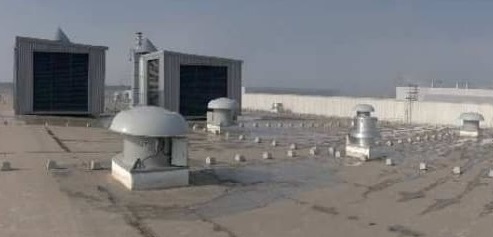
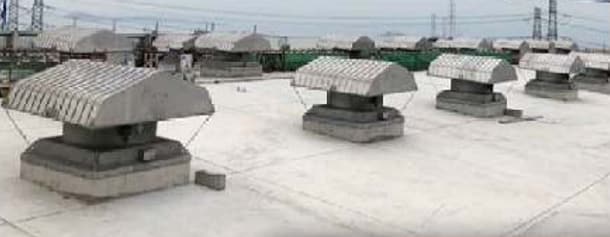
What Is a Roof Exhaust Fan?
A roof exhaust fan is an electromechanical ventilation unit mounted on a building’s rooftop to actively discharge stale air, excess heat, humidity, fumes, or airborne contaminants from enclosed spaces. By generating controlled negative pressure, these systems pull polluted air outward while enabling fresh air infiltration through strategic openings like windows, vents, or louvers. This continuous air exchange cycle is vital for:
- Health & Safety: Reducing exposure to harmful pollutants in factories, laboratories, or commercial kitchens.
- Structural Integrity: Preventing moisture buildup that causes mold, rot, or corrosion in attics and warehouses.
- Energy Savings: Minimizing HVAC workload by regulating indoor temperatures naturally.
Unlike traditional wall-mounted fans, roof exhaust systems operate silently and efficiently, making them ideal for large-scale or noise-sensitive environments.
Key Functions of Roof Exhaust Fans
Roof exhaust fans address multifaceted ventilation challenges across industries:
1. Thermal Management
In industrial plants or sun-exposed attics, temperatures can skyrocket, damaging equipment or compromising comfort. Roof exhaust fans expel hot air, lowering indoor temperatures by up to 15°F (8°C) and reducing air conditioning costs by 20–30%.
2. Humidity Regulation
High humidity in spaces like breweries, swimming pools, or food processing units accelerates mold growth and equipment rust. These fans help to maintain suitable relative humidity.
3. Contaminant Removal
From welding fumes in workshops to cooking grease in restaurants, roof exhaust systems capture and expel hazardous particles, ensuring compliance with air quality standards.
4. Energy Efficiency
By supplementing HVAC systems with natural ventilation, roof fans cut energy consumption by 15–40%, depending on climate and building design.
5. Fire Hazard Mitigation
In facilities handling flammable materials (e.g., chemical plants), explosion-proof roof exhaust fans prevent combustible gas accumulation.
Types of Roof Exhaust Fans
Roof exhaust fans are engineered for specific operational demands. Below are some top categories:
1. Axial Roof Exhaust Fans
How They Work: Propeller-driven blades move air parallel to the motor shaft, delivering high airflow volumes at low pressure.
Best For: Warehouses, parking garages, and agricultural buildings requiring cost-effective, large-scale ventilation.
SHUANGYANG FAN Solution:
DWT-I series roof mounted ventilation fan, has multiple specifications, a wide range of applications, high efficiency, low noise, light weight, and high strength.
2. Centrifugal Roof Exhaust Fans
How They Work: A rotating impeller accelerates air radially, creating high-pressure airflow suitable for ducted systems.
Best For: Factories, hospitals, and laboratories with duct networks or filtration needs.
SHUANGYANG FAN Solution:
Rooftop Centrifugal Exhaust Fan - RTC series has the advantages of novelty, beauty, high efficiency and energy saving.
3. Turbo Roof Exhaust Fan
How They Work: It works by harnessing wind and natural hot air rise, spins a turbine to exhaust air, without power, and because of simple design and durable materials, it needs little to no maintenance.
Best For: Villas / residences / industrial plants / warehouses
SHUANGYANG FAN Solution:
AWT Turbo Roof Fan series has the advantages of power and maintenance free, automatic exhaust all day without electricity, and can reduce the troubles caused by short circuit or voltage overload.
Conclusion
A roof exhaust fan isn’t just equipment—it’s a strategic asset for productivity and sustainability.
SHUANGYANG FAN has 30 years of experience specialized in ventilation, smoke exhaust and industrial fan manufacture.
Contact us to discover how our roof exhaust fan can slash your operational costs while boosting air quality!
Note: The data is for reference only, and the content of the article cannot avoid omissions and errors. Welcome to propose corrections.
 Libere el poder del ventilador de gabinete
 Ventilador axial industrial: Cómo mantener una circulación de aire adecuada
 Ventilador de ventilación industrial: manteniendo una buena calidad del aire
 Ventilador a prueba de explosiones: garantizando la seguridad en entornos peligrosos