
Differences Between Mixed Flow Fan and Axial Fan
Choosing the Right Fan for Industrial Ventilation
Ventilation plays a vital role in industrial buildings, factories, and commercial facilities. Selecting the correct type of fan ensures energy efficiency, proper air exchange, and system reliability. The mixed flow fan and the axial fan are widely used fan types in the industry. While they may appear similar in shape and installation, they serve different aerodynamic purposes and are suited to distinct working conditions.
At Zhejiang Shuangyang Fans Holding Co.,Ltd, we specialize in both mixed flow fan and axial fan, designed for high-performance airflow in demanding environments.
What Is a Mixed Flow Fan?
A mixed flow fan is a hybrid design that combines features of axial and centrifugal fans. Air flows through the impeller in a diagonal path, allowing for both axial movement and slight radial deflection. This design creates a balance between high airflow volume and higher static pressure, making the mixed flow fan especially suitable for ducted systems or areas with airflow resistance.
In practical applications, mixed flow fans offer:
-
Greater pressure than axial fans
-
Compact size compared to centrifugal fans
-
Reduced noise levels due to smoother air transitions
These fans are commonly used in stairwell pressurization systems, industrial ductwork, and commercial ventilation setups where medium static pressure is needed.
Mixed flow fans are ideal when your system requires higher static pressure and quieter operation without the size or cost of centrifugal fans. At SHUANGYANG FAN, our mixed flow fans are engineered with precision-balanced impellers and robust housing materials.
What Is an Axial Fan?
An axial fan propels air parallel to the axis of rotation. It is the most common type of fan used for simple ventilation tasks where high volume and low resistance are the priorities. Axial fans are typically cost-effective. They are widely used in:
-
Factory general ventilation
-
Tunnel and metro fan systems
-
Cooling systems for motors and electronics
-
Air exhaust from commercial or industrial buildings
The simplicity of the axial fan makes it a go-to solution for systems where pressure drop is minimal and long duct runs are not required.
Axial fans are best for moving large volumes of air in open environments with little resistance. If your application involves simple extraction or supply airflow without long ducts, our axial fan is often the more economical and efficient choice, and designed to operate reliably even in challenging conditions, with options for explosion-proof or high-temperature resistance depending on project needs.
Key Differences Between Mixed Flow Fan and Axial Fan
While both fan types may visually resemble each other, their performance characteristics differ significantly.
1. Airflow Direction
-
Mixed Flow Fan: Air exits in a mixed path—both axial and radial—resulting in more stable pressure.
-
Axial Fan: Air flows directly along the fan shaft in a straight line.
2. Static Pressure Capability
-
Mixed Flow Fan: Capable of handling medium static pressure environments. Ideal for installations involving duct systems or filters.
-
Axial Fan: Best suited for low-resistance applications with minimal static pressure.
3. Space and Installation
-
Mixed Flow Fan: Slightly longer than axial fans but still compact compared to centrifugal fans.
-
Axial Fan: Extremely compact and lightweight, easy to install even in tight spaces.
Conclusion
The choice between a mixed flow fan and an axial fan depends on your project's airflow requirements, system design, and performance expectations. While axial fans are suitable for simple, high-volume needs, mixed flow fans offer a balanced solution for applications that demand higher pressure, quieter operation, and better control.
At SHUANGYANG FAN, we offer a wide range of high-quality mixed flow fans and axial fans customized for commercial, industrial, and transportation ventilation systems tailorer for your demanding projects.
Note: The content of the article cannot avoid omissions and errors. Welcome to propose corrections.
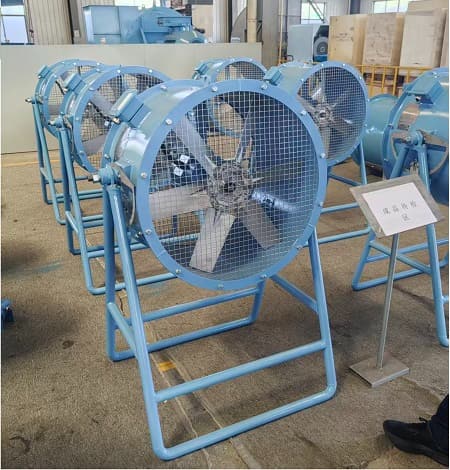 Mancooler (Workstation) Fans — Why Your Factory Needs the Right One
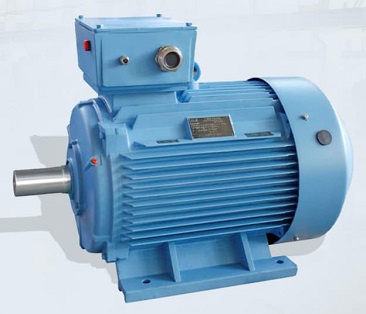 Motor Classifications in Industrial Fans
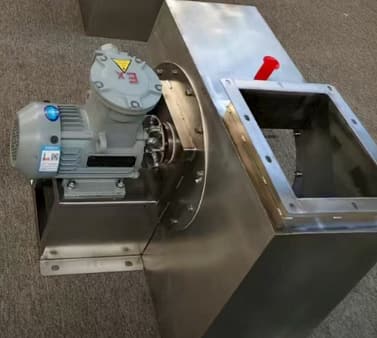 Materials for Explosion-Proof Fan
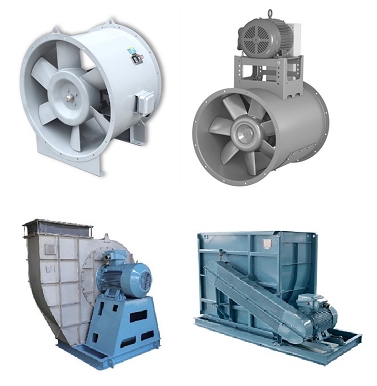 Direct Drive vs. Belt Drive in Axial Fan and Centrifugal Fan