
Smoke Exhaust Fan in Fire Safety
Smoke Exhaust Fan: Principles, Performance, and Applications
A smoke exhaust fan is a critical component of any fire-safety ventilation system. Unlike general ventilation fans, these units are engineered to move smoke, hot gases, and toxic combustion byproducts out of enclosed spaces—helping protect occupants and guide firefighters.
1. How a Smoke Exhaust Fan Works
A smoke exhaust fan is typically an axial or centrifugal unit built with heat-resistant components. In normal operation, it acts like a standard roof or inline fan, circulating fresh air. Upon fire detection, smoke detectors or building-management systems switch it into emergency mode, allowing it to:
Operate at elevated temperatures (up to 250–400 °C for 45min~2 hours).
-
Maintain static pressure against fire-rated dampers and ductwork.
-
Move high volumes of air (to meet evacuation and firefighter-access requirements).
Internally, the impeller may have reinforced blades (e.g. stainless steel or high-temp alloys), special lubrication, and insulated winding on the motor.
2. Key Performance Parameters
When specifying a smoke exhaust fan, engineers focus on:
-
Airflow Rate (m³/h or CFM): Must be sized to clear smoke from the protected zone within required timeframes.
-
Static Pressure (Pa): The fan must overcome the resistance of ducts, fire smoke dampers, grilles, and any heat-exchangers. Typical values range from 500 Pa to 3,000 Pa, depending on system complexity.
-
Temperature Rating: Emergency fans are tested at 250–400 °C for durations of 45min~2 hours, ensuring the fan keeps spinning even under fire conditions.
-
Power & Efficiency (kW, η): High-efficiency motors reduce standby energy usage, but in emergency mode, reliability takes priority over efficiency. Motors often have Class F or H insulation.
-
Noise (dB): While noise is less critical in smoke mode, normal ventilation may require <75 dB(A). Acoustic liners or silencer attachments can be added for dual-purpose fans.
Smoke Exhaust vs. Standard Ventilation
| Feature | Standard Ventilation Fan | Smoke Exhaust Fan |
|---|---|---|
| Temp. Rating | ≤60 °C (ambient) | 250–400 °C (high-temp) |
| Fire Damper Interface | Optional | Mandatory integration |
| Motor Insulation | Class B/F | Class F/H |
| Standby Energy | Optimized for efficiency | Less critical; reliability sovereign |
3. Applications
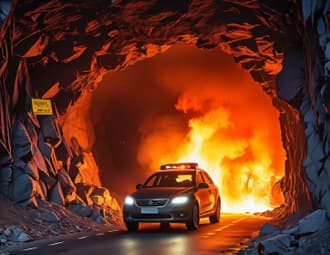
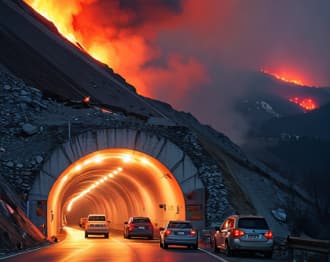
Smoke exhaust fan widely used in high-rise commercial buildings, underground car parks, road and rail tunnels, even nuclear and high-hazard facilities. For instance, for atriums, stairwell pressurization, and shaft extraction, smoke exhaust fans are roof-mounted or placed in mechanical floors. Fire codes often require redundancy (dual fan sets) and backup power. Fans integrate with fire smoke dampers to isolate sections and maintain pressurization of egress routes. Jet fans clear smoke in long tunnels. Fans are rated to up to 400 °C/2 h, with emergency reversibility. Control algorithms modulate fan groups to direct smoke toward safe egress shafts.
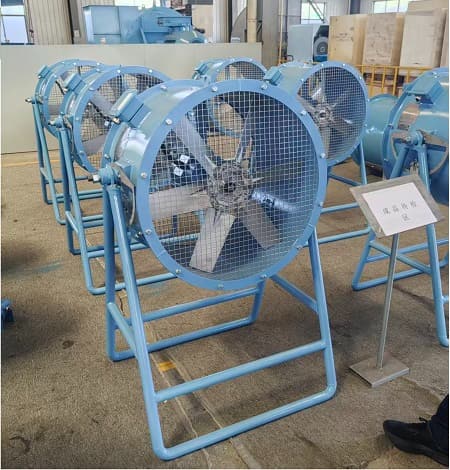 Mancooler (Workstation) Fans — Why Your Factory Needs the Right One
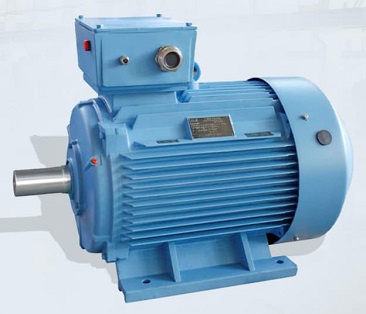 Motor Classifications in Industrial Fans
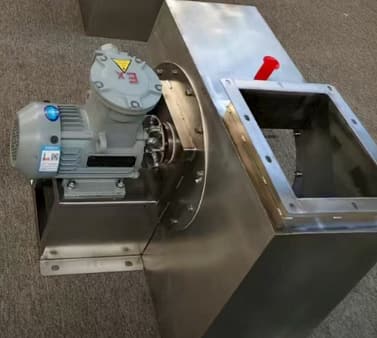 Materials for Explosion-Proof Fan
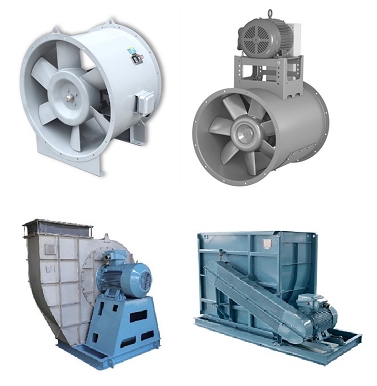 Direct Drive vs. Belt Drive in Axial Fan and Centrifugal Fan