
Explosion Proof Fan: Ensuring Safety in Hazardous Environments
An explosion proof fan (also known as explosion‑proof blower) plays a pivotal role in safeguarding industrial and building environments where flammable gases, vapors, or combustible dust are present. Properly selected and designed, these fans prevent ignition, protect personnel and facilities, and ensure regulatory compliance—all while maintaining reliable ventilation performance.
1. What is an Explosion Proof Fan?
An explosion proof fan is engineered to operate safely in explosive atmospheres by preventing internal sparks or heat from igniting hazardous materials. These fans often feature sealed motors, non‑sparking materials, and robust housings to avoid triggering an explosion. In short, they either contain any internal explosion or eliminate potential ignition sources altogether.
2. Where and Why Explosion Proof Fans Are Required
These fans are essential wherever flammable atmospheres may form:
-
Oil, gas & petrochemical plants – vapor risk from processing
-
Chemical and pharmaceutical facilities – solvent vapors and mixed dust environments
-
Grain silos, flour mills – combustible dust hazards
-
Haz‑area HVAC and containment units – e.g., negative‑pressure lab
Without explosion‑proof fans, standard ventilation systems risk acting as ignition sources.
3. Key Design Principles
Explosion‑proof fans typically adhere to one of three AMCA spark‑resistance designations:
Type A – all internal airstream surfaces are non‑ferrous; leaves and housing are spark‑safe.
-
Type B – fan wheel is non‑ferrous; housing may be ferrous but isolated.
Type C – wheel is ferrous but matched with non‑ferrous surrounding components to prevent ferrous contact.
In addition:
Motor enclosure must be rated for the hazardous zone.
-
Static‑dissipative coatings or grounding may be applied to reduce static risk.
4. Benefits of Explosion Proof Fans
Enhanced Safety
Designed to remove sparks, cool combustion, and meet enclosure standards — critical for preventing accidents.-
Operational Reliability
Robust construction withstands harsh surroundings (corrosive chemicals, extreme temps, dust) . -
Regulatory Compliance
Helps meet CCC, NFPA, NEC, OSHA, IECEx, ATEX, and other safety standards. -
Rugged materials result in longer life and fewer interruptions.
5. Choosing the Right Explosion Proof Fan
Considerations:
-
Hazardous area classification (e.g., Zone 1 vs 2; gas vs dust)
-
AMCA design (A/B/C) to reduce spark risk
-
Motor rating & enclosure certification
-
Duty cycle & airflow specifications
-
Material compatibility – to prevent corrosion or spark risk in the airstream
-
Maintenance access – for periodic safety and operational checks
A holistic selection ensures safety, performance, and compliance.
6. Integration & Maintenance Practices
-
Grounding and bonding are a must to prevent static buildup.
-
Proper ductwork design helps prevent spark entrainment.
-
Preventive maintenance includes checking gaskets, seals, motor performance, and explosion labels.
-
Documentation such as wiring diagrams, approval certificates, and maintenance logs ensures traceability.
Conclusion
An explosion proof fan is more than just a rugged fan—it’s a safety-critical equipment designed with special enclosures, spark-safe components, and precise classifications to operate reliably in volatile environments. Careful selection, proper integration, and regular maintenance ensure these fans protect people and facilities while sustaining efficient airflow.
Read more about SHUANGYANG FAN Solution
Note: The content of the article cannot avoid omissions and errors. Welcome to propose corrections.
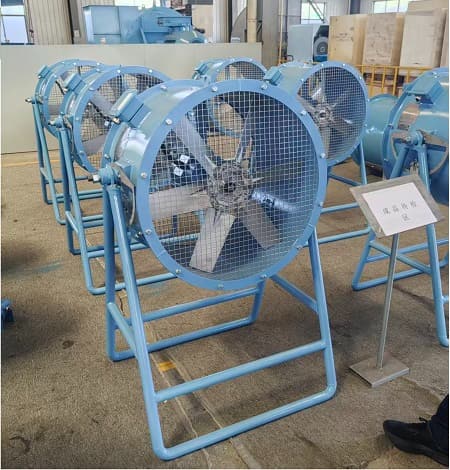 Mancooler (Workstation) Fans — Why Your Factory Needs the Right One
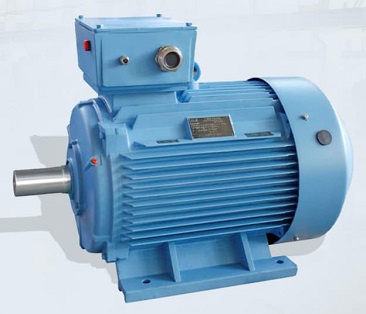 Motor Classifications in Industrial Fans
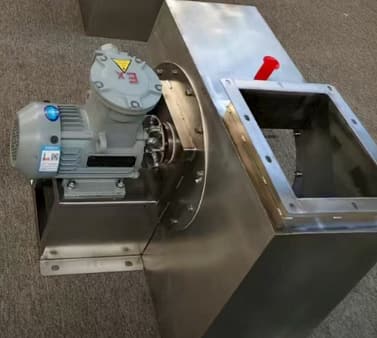 Materials for Explosion-Proof Fan
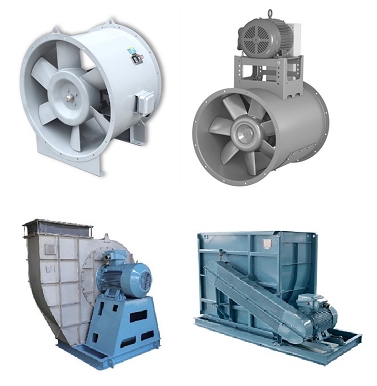 Direct Drive vs. Belt Drive in Axial Fan and Centrifugal Fan